Bill Stuntz just posted a high school graduation speech that he gave which attempts to answer two questions: why do you work? and how do you make plans for the future? It's worth the read. Here.
HT: Less than the least
Thursday, June 26
Loving what you do vs. doing what you love

Sunday, June 8
Enrique Penalosaa and equality

American culture considers equality an important value, but when we provide equal opportunity (i.e. everyone has access to our highways), we don't provide equal resources to take advantage of the opportunity (i.e. make sure everyone has cars to get on the highway). I do realize that another related element of American culture is the pull-yourself-by-your-own-bootstraps mentality, so it's not surprising that we'll provide people with opportunity, but without resources to fully take advantage of the opportunity (because that's their responsibility). But does this really make sense?
Tuesday, April 8
Is there any room left for the miraculous?
The NY Times has an article describing the birth of an Indian girl with two faces. She is visited by 100s of people everyday and honored as the Hindu god of valor incarnate. The NY Times dismisses this condition as mere superstition and explains that this is just a rare form of a condition known as "craniofacial duplication."
Science has given man an extraordinary ability to explain the world around us, but I wonder if it is to our detriment that we've closed off opportunities to see the miraculous. Where is the Holy Spirit working in such an inexplicable way that we have no choice but to attribute it to God? Modern and post-modern worldviews don't seem to allow the Holy Spirit room to work. Even spectacular supposed works of the Holy Spirit, like that of Benny Hinn (I have strong reservations about the guy based on what I've read), are explained as mass hypnosis. I will admit that his hook shot at 1:15 is pretty impressive though.
Tuesday, April 1
The Inefficiency of Law Firms
"If there’s an irony in law having become a business, it’s that law, it turns out, isn’t a very good business — or at least doesn’t have a very efficient business model. While manufacturers typically make money through economies of scale, and other service professionals, like investment bankers or architects, make money by taking a percentage of a deal or the cost of a project, lawyers for the most part still work for an hourly wage. In short, they’re in the business of selling their time.
The problem, of course, is that time is finite, so even if you’re selling those hours for an exorbitantly high rate — a handful of lawyers in Philadelphia can charge up to $1,000 an hour — it can be tough to build a successful, globally competitive business.
~The Last Days of the Philadelphia Lawyer
[HT: PhiLAWdelphia]
Monday, March 17
Laws and Social Norms

The good side of this type of social norm is that it builds a cultural identity. Americans (and whoever else) can bond over the annual holiday where we celebrate the life of a saint by getting bombed at the local Irish pub and arbitrarily wear a certain bright color. However, the good comes with some bad. The development of cultural identity creates a sense of being an insider, but that naturally makes outsiders even further outside. If you know my family, you know we have no Irish ties in our bloodline. So apart from generally not knowing what day it was to begin with when I was a kid, my parents didn't treat March 17th as anything special (maybe because they had not received the gentle elementary school reminder to wear green). As a result, every March 17 was a pinch fest for me at school. While I didn't really appreciate it at the time, the pinches served as encouragement to align myself with social norms. Now, even though I still don't remember (or care to) wear green, I at least aware that I may be conspicuous for having not worn green. I'd say the enforcement of the social norms worked.
Wednesday, February 27
Hope and Joy

Tuesday, February 26
Yes I can...pay more taxes?!
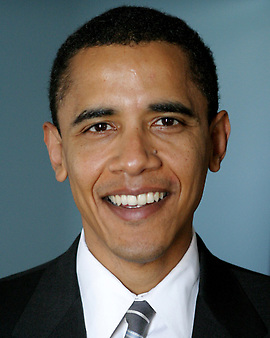
How might Obama's tax plan affect lawyers? Check this out.
A $20k cut in take-home pay doesn't necessarily mean you shouldn't consider voting for the guy. You might be able to get used to the idea of earning $20k less if you thought it was going to be spent well. In my mind, a candidate's view on other policies inform your opinion of their tax policy in many respects.
Tuesday, February 19
Making the connection
Some of you might not recognize the performer or the song in the video, so I should explain. That is Michael Nutter, the recently elected mayor of Philadelphia, performing the hip hop classic Rapper's Delight (He starts up 1 minute into the video.). You often see politicians using music as a way to connect with people (think Clinton playing the sax and Huckabee playing the bass). To be honest, I haven't really thought of someone using hip hop before, but it completely made sense for Nutter, who was trying to get the black vote. The fact that I found this surprising at all probably reflects that for some reason, I don't think hiphop has risen to the level of respect in popular culture that rock and roll and jazz has--that it is somehow unbecoming of a politician. I wonder why that is?
As a side note, I just don't see Obama or Clinton stepping up to the mike to win the black urban vote (all things considered, Nutter's performance is pretty impressive and I don't know that Obama or Clinton could even come close to competing). And John McCain--well he's probably not even shooting for that demographic, but that would get ugly really quickly.
Hat tip to acupofambition
Saturday, February 16
"Wayward Christian Soldiers"

"Evangelicals in the United States have tried so hard to become relevant that we have forgotten what it means to be peculiar. But what we need now is not more relevance or more connections; what we need is to experience the gospel again in its strangeness and mystery; to be reminded that the only reliable basis of Christian thinking and action is God's revelation of himself in Jesus Christ, and thus that only God is God...
Remember the first commandment: "Thou shalt have no other gods before me"? A concrete application of the divine law to our time might well read: God does not need America in order to be God. "
There is a freedom in enjoying a God big enough that politics matters, but at the same time, there is a danger in making God too small--reducing God to some set of ideals that we hold (or hope to hold).
Wednesday, February 13
We're number 5!
Buried within this article about Philadelphia being the 5th most miserable city in the U.S., are a few nuggets of wisdom:
"If you don't really commit to a place and say, 'This is it, this is home,' you're unlikely to be very happy anywhere."
But when it comes to the recipe for a happy city, there's one ingredient that is more important than any other, Weiner said.
And it's not the weather.
"Trust. It's a non-negotiable thing," Weiner said. "And trust is determined by the quality of local government and the quality of relationships people have with one another."
Scientists and economists tend to agree. Trust is not only essential for happiness, it's a fundamental requirement for a functioning economy.
"Trust makes us care about each other," said Paul J. Zak, director of the Center for Neuroeconomics Studies at Claremont Graduate University in California. "Trust is internally rewarding for the same reason eating or sex feels good. Your body is telling you this is an important activity."
Commitment, trust, and community are important things. Whoa. Mind-blowing.
Subscribe to:
Posts (Atom)
