
Right now they are mounting an effort to get pastors to disregard the nonprofit tax laws in order to build a freedom of speech claim against the IRS. The way 501(c)(3) status works, churches (and any other 501(c)(3) organization are strictly limited in their ability to lobby or promote political candidates. The ADF argues that this is an unconstitutional limitation on the freedom of speech. This is why this development upsets me:
Because the founders of the organization are such big names in the Christian community, the work of ADF is likely to be perceived as efforts by the evangelical community at large. At least in my corner of the world, I don't see strong Christian support for this. ADF is essentially calling on pastors to break the law. When Jesus said to "give to Caesar what is Caesar's," he was essentially supporting the tax law of the existing regime. While ADF might argue that part of the church's mandate is to tell congregants whom to vote for (I don't happen to believe that is necessarily true) and thus they much choose to either obey their God-given mandate over the tax law, this is a false conflict.
501(c)(3) tax exempt status is a privilege given to churches with the underlying assumption that churches give something back to society, so the government wants to subsidize it. If a pastor wants to be really involved in politics, the laws do not prevent that--the pastor can just not claim 501(c)(3) status for his church. The church can allow all tithes and offerings to be taxed and it will no longer get free postage. While there is a cost to this decision, there really is no conflict at all.
In fact, I think this challenge is more likely to hurt churches rather than help. As I said before, the tax exemption for churches is based on the understanding that churches are beneficial to society, but also historically, the exemption finds its basis in legislators feeling uncomfortable infringing on the sovereignty of the church through taxation. Now, given the increasingly secular culture of the United States, the value of the church to society is likely to decrease as is the recognition of the church as sovereign. My sense is that tax exemption for churches is already on shaky ground. Does ADF really want to draw attention to this? Is this really the biggest legal challenge facing the Christian community? This looks to me to be a case of one step forward for two step back.
Saturday, September 27
Churches, nonprofit status, and politics

Friday, August 29
The hope that we confess
I watched Obama's speech at the Democratic Convention last night. I was struck by his religious rhetoric. He alluded to the response of Cain to God when he said that we are our "brother's keeper," which I didn't find particularly objectionable. What I thought was more interesting was his final sentence: "Let us keep that promise - that American promise - and in the words of Scripture hold firmly, without wavering, to the hope that we confess."
Though that snippet is from the words of Scripture (Heb 10), it certainly does not convey the meaning of Scripture. Obama calls Americans to strive for progress based on a hope in our own abilities. This is actually directly opposed to what Scripture says.
I am less concerned about what this conveys about Obama as much as I am intrigued and saddened by what this suggests about Americans at large. This was the type of speech that a whole committee spends days carefully crafting to resonate with a large segment of Americans. The fact Obama closed his speech the way he did suggests that something about Scripture resonates with the American public yet the meaning of the words is not something people understand or care about. A general sense of spiritual apathy across the country is more troubling than who ultimately wins this upcoming election.

Tuesday, February 26
Yes I can...pay more taxes?!
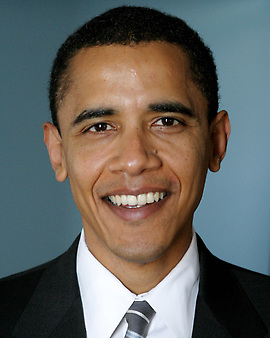
How might Obama's tax plan affect lawyers? Check this out.
A $20k cut in take-home pay doesn't necessarily mean you shouldn't consider voting for the guy. You might be able to get used to the idea of earning $20k less if you thought it was going to be spent well. In my mind, a candidate's view on other policies inform your opinion of their tax policy in many respects.
Tuesday, February 19
Making the connection
Some of you might not recognize the performer or the song in the video, so I should explain. That is Michael Nutter, the recently elected mayor of Philadelphia, performing the hip hop classic Rapper's Delight (He starts up 1 minute into the video.). You often see politicians using music as a way to connect with people (think Clinton playing the sax and Huckabee playing the bass). To be honest, I haven't really thought of someone using hip hop before, but it completely made sense for Nutter, who was trying to get the black vote. The fact that I found this surprising at all probably reflects that for some reason, I don't think hiphop has risen to the level of respect in popular culture that rock and roll and jazz has--that it is somehow unbecoming of a politician. I wonder why that is?
As a side note, I just don't see Obama or Clinton stepping up to the mike to win the black urban vote (all things considered, Nutter's performance is pretty impressive and I don't know that Obama or Clinton could even come close to competing). And John McCain--well he's probably not even shooting for that demographic, but that would get ugly really quickly.
Hat tip to acupofambition
Saturday, February 16
"Wayward Christian Soldiers"

"Evangelicals in the United States have tried so hard to become relevant that we have forgotten what it means to be peculiar. But what we need now is not more relevance or more connections; what we need is to experience the gospel again in its strangeness and mystery; to be reminded that the only reliable basis of Christian thinking and action is God's revelation of himself in Jesus Christ, and thus that only God is God...
Remember the first commandment: "Thou shalt have no other gods before me"? A concrete application of the divine law to our time might well read: God does not need America in order to be God. "
There is a freedom in enjoying a God big enough that politics matters, but at the same time, there is a danger in making God too small--reducing God to some set of ideals that we hold (or hope to hold).
Sunday, November 4
Evangelicals and politics

